Commercial Cleaning for Small Surgeries and Medical Practices in Nottinghamshire: What Hygiene Standards Require
We cover office cleaning for surgeries across Nottinghamshire and Lincolnshire. Find out what medical premises need and how we can help.
Why surgeries and medical offices need a different approach to cleaning
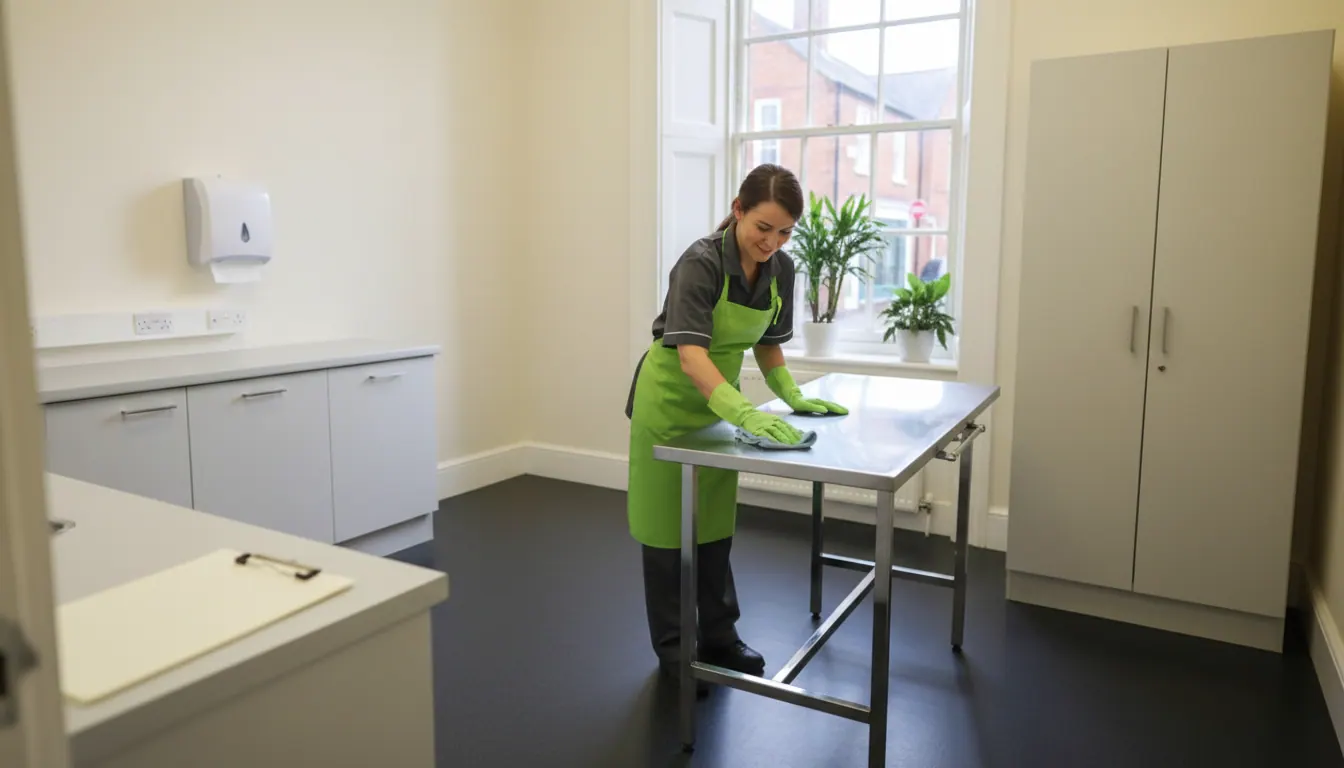
A GP surgery, dental practice or physiotherapy clinic is not the same as a standard office. The surfaces are touched constantly, the footfall is high throughout the day, and the people using those waiting rooms are often already unwell. That raises the bar for what a clean actually needs to achieve.
We cover office and commercial cleaning for surgeries, clinics and healthcare premises right across Nottinghamshire and into Lincolnshire and Derbyshire. From practices in Newark-on-Trent and Southwell to clinics in Nottingham, Grantham, Mansfield and Lincoln, we understand what practice managers and facilities staff actually need from a cleaning team.
This article sets out what good surgery cleaning looks like in practice: the areas that matter most, the schedules that work, and the questions worth asking before you hand over a set of keys.
The areas that carry the most risk in a surgery or clinic
Waiting rooms take a lot of punishment. Hard chairs, low tables stacked with leaflets, door handles, reception screens and card readers. These surfaces are touched by dozens of patients every hour. They need wiping down thoroughly and regularly, not a quick pass with a dry cloth.
Consulting rooms require careful attention around the examination couch, the desk and any equipment surfaces. Floors in these rooms often need more than a sweep: body fluid residue, scuffed shoe marks and tracked-in debris from patients who have come in from outside all accumulate faster than in a typical office.
Reception desks and check-in points are some of the busiest contact surfaces in any building. Keyboards, telephone handsets, pens, counter surfaces and the floor directly in front of the desk all need consistent attention.
Toilets in a medical setting need to be cleaned to a standard that goes beyond a domestic bathroom. We treat patient toilets in surgeries as high-priority areas: sanitising contact points, restocking consumables where requested, and making sure nothing is missed on the floor or behind the door.
Staff areas, including kitchens and break rooms, matter too. A surgery that is spotless for patients but has a cluttered, poorly cleaned staff room is not a premises that has been looked after properly.
Scheduling that works around a busy practice
One of the most practical questions a practice manager faces is when to schedule cleaning without disrupting appointments. We work across a wide window: our hours run from 7am to 8pm, Monday to Saturday. That means we can clean before the first appointment of the day, during a lunch break, or after the last patient has left in the evening.
Early-morning starts work particularly well for surgeries. A clean that finishes before 8am means the waiting room and consulting areas are fresh when doors open. Evening cleans suit practices that run extended hours or want a thorough end-of-day clean without cleaners moving around patients.
For practices with a daily cleaning requirement, we can set up a regular schedule. For those that need a weekly or fortnightly deep clean on top of in-house daily tidying, we can fit around that too.
What a thorough surgery clean actually covers
It helps to be specific about what a professional clean in a medical setting should include. Below is a practical summary.
Waiting room and reception:
- All hard seating wiped down with appropriate surface cleaner
- Reception counter, screens and card readers sanitised
- Door handles, light switches and push plates cleaned
- Floors vacuumed and mopped
- Skirting boards and window sills dusted
Consulting rooms:
- Examination couch and surrounding area cleaned and sanitised
- Desk surfaces, keyboards and telephone handsets wiped
- Floors mopped thoroughly
- Bins emptied and relined
- Any clinical waste bins checked (removal is the practice's responsibility; we work around them)
Toilets:
- All contact surfaces sanitised: flush handle, tap, door handle, light switch
- WC, basin and surrounding area cleaned thoroughly
- Floor mopped including behind the door and around the base of the WC
- Mirror and shelf wiped
- Consumables restocked if supplied by the practice
Staff areas:
- Kitchen surfaces, sink and appliance exteriors wiped
- Microwave interior cleaned
- Floor swept and mopped
- Bins emptied
We use eco-friendly cleaning products on request, which suits practices that prefer lower-chemical environments or have staff with sensitivities.
The difference between a one-off deep clean and a regular schedule
Some practices come to us for a one-off deep clean: perhaps after a refurbishment, a change of tenancy or a period when cleaning has slipped. A deep clean goes further than a regular maintenance clean. Ovens in staff kitchens, extractor filters, grout lines in tiled areas, limescale on taps and sanitaryware, high-level surfaces and behind equipment all get attention that a routine visit would not typically cover.
For ongoing premises, a regular schedule keeps standards consistent. A deep clean done well, followed by regular maintenance, is far easier to sustain than trying to deep clean a neglected premises every few months.
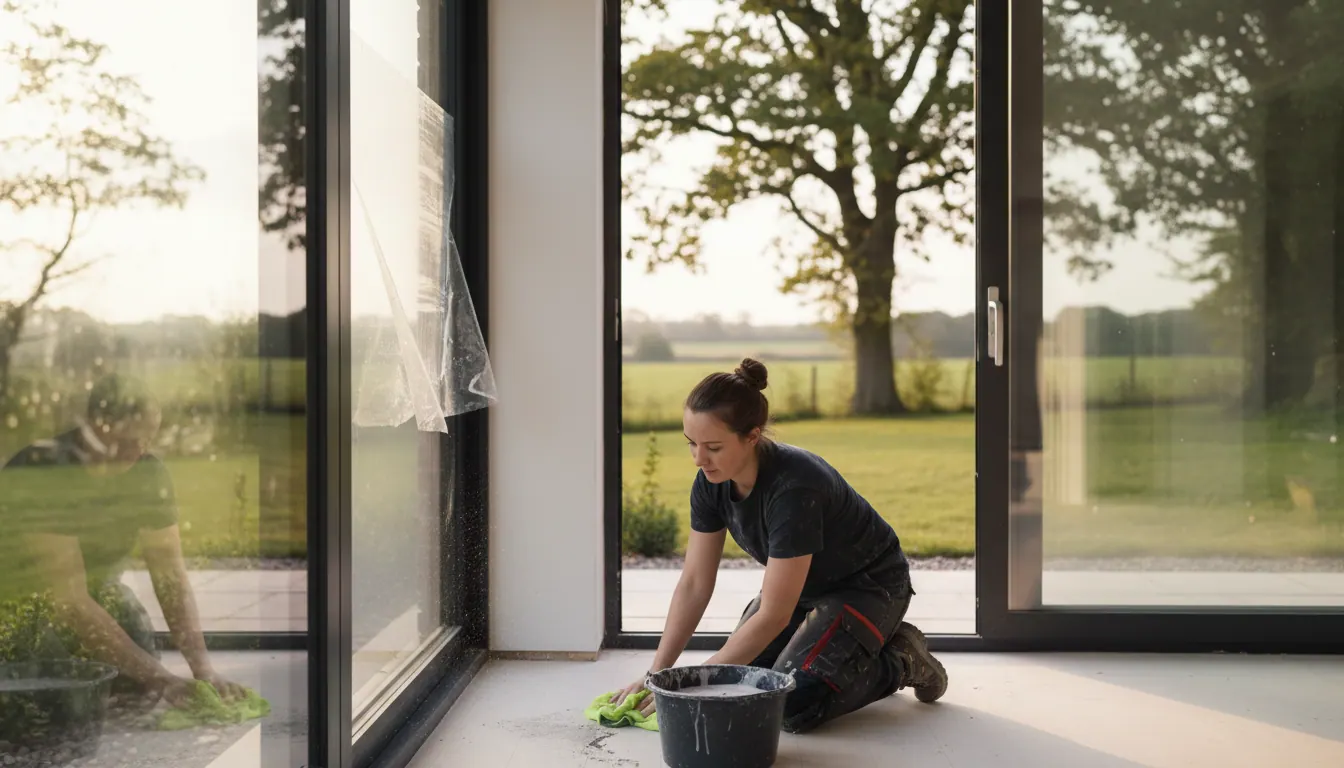
If you manage a surgery that has just moved into new premises or had building work done, our after-builders cleaning service handles the construction dust, adhesive film and debris that inevitably comes with a fit-out. We cover that work across Nottinghamshire and Lincolnshire.
For offices and commercial premises more broadly, our office and commercial cleaning service sets out how we approach regular schedules for businesses of all sizes.
What practice managers tell us they need most
Practice managers responsible for clinical premises usually have the same priorities. They want:
- Consistency. The same standard every time, not a thorough clean one week and a rushed one the next.
- Reliability. A team that turns up when agreed and communicates if anything changes.
- Discretion. Cleaners who work quietly around staff and, where relevant, around patients.
- Attention to detail. The areas that are easy to miss (behind doors, under furniture, around the base of the WC) are the ones that matter most in a clinical setting.
We work closely with each client to make sure requirements are understood before we start. Every premises is different, and a surgery in Worksop has different layout and scheduling needs to a dental clinic in Grantham or a physiotherapy practice in Collingham.
Frequently asked questions
What should a cleaner cover in a two- or three-hour visit to a surgery?
Two hours is enough for a focused maintenance clean of a small practice: waiting room, reception, one or two consulting rooms, a toilet and a staff kitchen. Three hours allows for more thorough attention to each area, including mopping all hard floors, sanitising all contact points properly and getting into the detail of kitchen appliances and bathroom fixtures. For larger premises or a first clean after a period of neglect, we would typically recommend allowing more time. We assess each premises individually and quote accordingly.
Can you clean around patients and appointments, or does the surgery need to be empty?
Most routine maintenance cleaning works best when the premises is empty or between appointments, simply because it is more thorough and less disruptive. That said, we are used to working around busy schedules. Early morning before doors open, or after the last appointment in the evening, tends to work well for most practices. We agree the timing with you before we start.
Do you use cleaning products that are safe for clinical environments?
Yes. We use products appropriate to the surfaces and the environment. Eco-friendly products are available on request. We never mix chemicals, and we always follow safe practice with any products used on clinical or food-contact surfaces. If your practice has specific product requirements, let us know when you get in touch and we will work to meet them.
Do you cover surgeries and clinics outside Newark, across Nottinghamshire and Lincolnshire?
Yes. We are based in Newark-on-Trent and cover a wide area including Nottingham, Mansfield, Lincoln, Grantham, Retford, Worksop, Sleaford, Derby and the surrounding towns and villages. If your practice is within roughly a 50-mile radius of Newark, get in touch and we can discuss what is needed.
Getting the right clean in place for your practice
A surgery or clinic that is cleaned properly is not just more pleasant for patients and staff. It reflects the standards of the practice itself. Waiting rooms, consulting rooms and patient toilets that are visibly well maintained say something about the care that goes into everything else.
We take that seriously. Our attention to detail is second to none, and we work closely with each client to make sure the clean we deliver matches what the premises actually needs.
If you manage a surgery, dental practice, physiotherapy clinic or any other healthcare premises in Nottinghamshire, Lincolnshire or Derbyshire, we would be glad to help. Call us on 07542 687962 to talk through what your premises needs and when we can get started.